The List

The List

Here is The List, a compilation of names intended to serve as a more egalitarian and apolitical response to the Hall of Fame in Cooperstown....

Saturday, 16 July 2022

Class of 1887, 2/2 : Octavius Catto


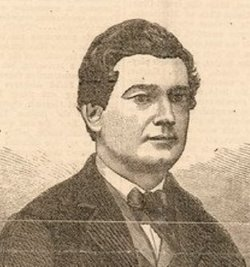
Octavius V Catto (1839-1871), Builder

Eligible : 1872

Contributions : An important civil rights activist in the Philadelphia area, Catto helped found the Pythian Base Ball Club, one of the earliest known black baseball clubs and a precursor to the Negro Leagues. Challenged the baseball establishment by applying to the NABBP in 1867, and effectively laid the foundation for the colour barrier when the Pythian was rejected. 

Everybody knows the story of how the colour barrier was broken in baseball, allowing black players, and eventually players of all ethnicities, to play professional baseball : in 1947 Jackie Robinson was called up to the LA Dodgers, and endured years of vile epithets and jeers in stadiums across the country, beanballs, criticism from the press, umpires, opposing players and teammates alike, kept his head high and put in a Hall of Fame career, paving the way for many of the best players of the second half of the 20th century. Of course, this narrative is false. Not the stuff that happened to Jackie, or the things Jackie did. But the idea that Jackie Robinson broke baseball's colour barrier in April 1947 is wrong.

Fans of baseball history will know that on 1 May, 1884 Moses Fleetwood Walker, a black man from Mount Pleasant, Ohio, caught his first game for the Toledo Blue Stockings of the American Association (AA), one of two major leagues at the time, making him the first black man to play professional baseball before being run out of the game later that year by significant racial pressure. But this, too is wrong. Again, all of these things happened, but Walker was not the first.

In June of 1879 William E White, a freed slave, played for the Providence Greys. He wasn't great and was out of baseball later that year, and his story is complicated by his status as what was then known as a 'mulatto', the son of his slave mother and his owner father. His mixed race allowed him to hide his identity as a black man for much of his life. Is White the first professional black baseball player? If not, who is?

It's complicated. 

The issue of black people playing baseball is an important one, and its history is as old as baseball itself. I would respectfully suggest we remove some of the emphasis placed on Jackie, or Fleetwood, or White. While they certainly deserve the respect they each earned in their own rights, to reduce not just their own stories but the story of black men in baseball to a single game in the spring of 1947 or 1884 serves chiefly to erase so much of important black baseball history -- not just the negro leagues, for which there is significant political will to revive and maintain their history, but the half-century of baseball that predates even the earliest official negro leagues, back to the very beginning of baseball in the Northeastern United States as we know it. 

This is not the story of the beginning of black baseball, but its the story of a man who was as close to such a thing as can be credited to a distinguishable character. This is the story of Octavius V Catto.

Catto was born in Charleston, South Carolina on 22 February, 1839, to a free-born mother and a father who had been granted his freedom after a life of slavery as a millwright. Catto's mother, Sarah Isabella Cain, was a prominent Charleston socialite and activist within the black community, and his father, William, became an ordained Presbyterian minister before relocating his family to the north - first Baltimore, then Philadelphia, in the free state of Pennsylvania. 

As the son of prominent members of the black community, Catto received a diverse education, including segregated primary schools, the all-white Allentown Academy in New Jersey, and the Institute for Coloured Youth (ICY), the country's first and most prestigious all-black high school where he received a top-rate classical education in literature, Latin, Greek, and Mathematics. While at ICY Catto joined a scholarship discussion group led by Jacob C White, whom we may hear from again in these pages. After graduating in 1858, Catto continued learning Greek and Latin with a private tutor in Washington, DC.

In 1859 Catto returned to the staff at ICY, now named the Benneker Institute, as Recording Secretary and a teacher of English and mathematics. By the mid-1860s Catto was a leader among the staff, and gave the commencement address for 1864, during which he criticised white teachers of black students, and commented on the developing Civil War. By the following year he was speaking to packed houses at Philadelphia's National Hall, and by 1869 he was principal of male students at Benneker. 

Catto as a recruiter in the Civil War
The Civil War was a formative experience for Catto, as it was for many young men of the time. For Catto, however, it was a higher education in matters of race, civil rights, and organization. Indeed, Catto (who was commissioned a Major in the army but never fought) emerged as one of the great organizers of the time, serving as one of the chief lieutenants for Frederick Douglas's recruitment regime, helping Douglas raise eleven regiments of black soldiers from the Philadelphia region that saw action at the front, and several other companies that did not. 

Through the 1860s Catto fought hard to desegregate Philadelphia's trolley car system, and was involved in at least one early instance of civil disobedience, which the New York Times reported : 


Philadelphia, Wednesday, May 17—2 P. M.

Last evening a colored man got into a Pine-street passenger car, and refused all entreaties to leave the car, where his presence appeared to be not desired.

The conductor of the car, fearful of being fined for ejecting him, as was done by the Judges of one of our courts in a similar case, ran the car off the track, detached the horses, and left the colored man to occupy the car all by himself.

The colored man still firmly maintains his position in the car, having spent the whole of the night there.

The conductor looks upon the part he enacted in the affair as a splendid piece of strategy.

The matter creates quite a sensation in the neighborhood where the car is standing, and crowds of sympathizers flock around the colored man.

 — New York Times, May 18, 1865, p. 5


Catto's advocacy paid off when, with the help of legendary congressman and abolitionist Thaddeus Stevens, Pennsylvania abolished the practice of segregated public transportation in 1869. 

1863 Pamphlet citing Catto's speeches

Catto's relevance to our Hall and to baseball history started in his youth. As a young man at various institutions of higher learning, Catto played cricket, like so many young men, both black and white. At some point in their teenage years Catto and one of his close friends, Jacob C White, switched to baseball and while teaching at the ICY founded a baseball team - the Independent Base Ball Club - in the mid-1860s. 

Catto and White had a greater vision for the Independent than a casual / hobbyist squad for young professional men like the New York clubs 20 years earlier. To them, fielding a competitive team representing a black institution of higher learning was an important statement for civil rights, and in the fallout of the Civil War (ending 1865), baseball was one of the most important arenas of American cultural life, and making a statement there was incredibly significant. By 1866 the Independent was one of the best teams in the city, and renamed themselves after one of the ICY's more popular fraternities, the Knights of Pythias - the Pythians. 

Catto was the the driving force behind the club - co-founder, captain, and starting shortstop/second baseman. While the team was very successful, going 9-1 in 1866 and undefeated in 1868, the impact on the larger black community was significant. The Pythian were one of the most famous black clubs in the northeast, and their matches against black clubs from Washington drew huge crowds. When the Pythian played the Washington Alert, founded by Frederick Douglass, jr., Frederick Douglass himself came to watch. These games between elite black clubs were covered favourably in the press, and attended and promoted by white players. Catto had been right - black baseball was an avenue to positive sentiment from the white class, and pride for the black community. 

Catto's leadership and fine play led the team to an undefeated 1868 season. Catto's plan worked magnificently - the Pythians were famed not just or their skill on the field (particularly with the bat) but for being gentlemanly and upstanding young men, and garnered positive reviews from onlookers and journalists alike. It should be noted that this patronizing language could be taken as offense, and maybe should be, but it was exactly what Catto was after. His goal was not just to put a winning black ballclub on the field, but to display a winning and mature black disposition to a white audience. 

The Pythian was a political home run for Catto, as atrocious as the pun is. It gave him an opportunity to address and organize huge crowds of young black men. He would often give speeches before or after games to the gathered crowds (again, of both black and white spectators) on issues of civil rights, and he took the Pythian around the Northeast and down the Atlantic coast in an early example of barnstorming's illustrious history in baseball, speaking to crowds the entire way. Baseball was exactly the civil rights vehicle Catto had hoped. 

The Pythian's success saw enormous effects on the Philadelphia baseball community. In the wake of the Pythian's success, many black clubs organized overnight, including several women's clubs, which drew large crowds. When Philadelphia emerged as a hub of Negro League baseball in the coming decades, it was thanks to Philly's history as a hub of black baseball, and that reputation can trace its lineage directly to Catto and the Pythian. In fact Philly owes much of its reputation as a baseball town to its history as a black baseball town, and has, again, Octavius V Catto to thank for that fact. 

I shouldn't imply that Catto's career with the Pythians was comprised of never ending successes; there were limitations to what the white establishment, in government or in organized baseball, would allow. For example, Catto's 1867 petition to have the Pythians admitted to the National Association of Base Ball Players (NABBP) is an important moment in baseball history. Following that season of play, Catto applied to be admitted to the Pennsylvania State Association of Base Ball Players, the state chapter of the NABBP, with the support of the member Philadelphia Athletic club, the renowned club that was the precursor and namesake of today's Oakland A's. 

The Athletics, a respected club of the amateur era, were run by player / manager Hicks Hayhurst, who seemed energized by the pre-Jim Crow era of reconciliation and would regularly stage games between his white club and area black clubs to highlight the skill of the latter, and was happy to sponsor the Pythian to the Pennsylvania Association. For all Catto had done to further the cause of black baseball and civil rights, the 1867 convention was a harsh lesson : the Pythian were not only rejected, but denied the chance to address the convention or request a vote on their membership, while the convention admitted 265 new white teams. 

Catto, never one to be deterred, attended the national convention of the NABBP in Philadelphia later that year, submitting another application for membership to the national body and again supported by the Athletics. This time the proposal was allowed to see the floor as a vote, but the result was the same : there would be no black baseball team in the NABBP.  The National Association explained their verdict in an almost benevolent, regretful tone : "If Colored clubs were admitted there would be, in all probability, some division of feeling, whereas by excluding them no injury would result to anyone." Later statements confirmed an aversion to 'politics' in what would amount to an abdication of responsibility in the discussion, and one that was later apologised for by baseball historians, who wrote of baseball as a 'healing balm' between north and south, which was too important to be hampered by the inclusion of blacks, showing that baseball's distasteful colour barrier dates back essentially to the invention of the game. 

Catto, again, changed tack. Realising that he would never be invited or allowed to participate in what was evidently a white man's organization, he endeavored to use baseball for his civil cause in a new way - by beating a white club. In an inversion of the old axiom, if Catto couldn't join 'em, he would simply beat 'em. 

Initially it seemed like the Pythians would have a hard time finding a dance partner - what white club would risk the humiliation of losing to a black one? But again, Catto had an ally in the Philadelphia Athletic. One of the Athletic's founders, Thomas Fitzgerald, was a stanch progressive on race and had one of the loudest megaphones in the city as the publisher of City Item. He regularly published pieces arguing for black voting rights, to the point that his views were considered too radical for the Athletic and he was ousted from the club. Fitzgerald spent much of 1869 arguing for normalizing relations between black and white baseball. He called out the Athletic in particular, arguing that they were afraid of losing to the black Pythian, and public pressure mounted. 

By August of 1869 white clubs were lining up to express interest in Philadelphia papers in playing the Pythian - first the Masonics, then the Keystones, the Experts, the Franklins, even the Athletics. But it was just publicity - no games between white and black players took place. Still, Fitzgerald beat the drum in the press and Catto leveraged his political and commercial relationships. Soon the Philadelphia Olympic, by many accounts the nation's oldest ballclub with roots dating to 1831, accepted, and the two clubs took the field on 3 September 1869, the first interracial game, at least of this profile, in baseball history. The game took place on the Olympic's home field, and Fitzgerald served as the umpire. 

The game drew an immense crowd - by some accounts the largest crowd in the history of baseball outside of the Olympic's game against the legendary Cincinnati Red Stockings earlier that summer. It was another example of Catto's view of baseball as a vehicle for demonstrating the qualities of African Americans. At the time, the game had one umpire who instead of calling every safe/out, would adjudicate as players called their own outs, in case of a dispute. Before the game Catto instructed his players not to appeal any call by the Olympic, as they would be viewed as blacks complaining to whites in front of a high-profile crowd of thousands. The Pythian, whose normal starting pitcher, John Cannon, was injured and didn't perform well. The Olympic won, 44-23, but the next day's papers praised their effort and conduct, and claimed they would have been able to win the game if they'd appealed several unfair calls to the sympathetic umpire. It was yet another PR coup for Catto and the Pythian. 

Catto still wanted a victory of a white club, and got one on October 16 of the same year when the Pythian beat the City Item Club 27-17. Interracial games featuring many other black clubs became, if not common, then regular occurrences following 1869, giving a rare opportunity to workers of both races to interact with each other. 

These inter-racial games would mark the highwater mark for Catto's baseball career during his lifetime, though his political activity never would end, right up to the moment of his death. 

By 10 October, 1871, Election Day, Catto was a well-known political agitator, organiser, orator, writer, and teacher. Then, as now, these activities made him a hero to many - but a target to others. 

On that day in 1871 Philadelphia was a tinderbox. Predominantly-Republican black people and predominantly-Democratic Irish, who called neighbouring districts home, clashed in the streets all day. Police were called on to stem the violence, but many of them were Irish themselves and were noted for inciting violence, blocking black people from voting, in some cases resulting with the arrests of the officers themselves. 

Illustration of Catto's murder
After a day of teaching, Catto joined the fray. He made his way to a local polling station, presumably to vote, harassed as he walked. At the corner of Ninth and South streets, Catto was beset by an Irishman named Frank Kelly, who shot him three times in front of a streetcar full of witnesses. Accounts vary, but some reports have Catto attempting to pull his own pistol too late, or attempting to rise from the ground, gun in hand, before being shot again. Kelly fled and although he was tried for the crime seven years later, he was acquitted. 

Marking the place of 
Catto's murder
The role of civil rights champion and, ultimately, civil rights martyr would be Catto's lasting legacy. His funeral procession through the streets of Philadelphia contained 125 carriages, allegedly the largest since Lincoln's, and was attended by tens of thousands, black and white, ballplayers, activists, congressmen, and soldiers. Democratic politics in the city were tarnished, and Republican performed well in the early 1870s, electing many black people to public office before the onset of Jim Crow and the slowdown of the black militancy movement. 

In 2017 Philadelphia erected it's first statue of an African-American - a 12-foot bronze statue of Octavius Catto at City Hall. At the unveiling, Philadelphia mayor Jim Kenney lamented, "How in God's name did I not know this man? He was the Dr. King and the Jackie Robinson of his day."


2017 statue in front of City Hall

But because he was a towering figure in the history of civil rights does not mean that he is not an important figure in baseball history as well. In the years after his death his club, the Pythian, kept playing before chartering the National Colored Base Ball League, one of the first and most influential Negro Leagues, in 1887. Catto's fingerprints were all over the early days of black baseball. 

Perhaps Catto's most important legacy is that of the activist athlete. In the United States the political athlete is an institution, from Jackie Robinson to Muhammad Ali to John Carlos and Tommy Smith to Colin Kaepernick. Fans often claim to yearn for the separation of sport and politics, but the politically active athlete is a crucial part of American history and culture. In baseball, in activism, and in the particular blend of the two, Octavius Catto led the way. 

Tuesday, 19 April 2022

Class of 1887, 1/2 : Will White

William Henry 'Whoop-La' White (1854-1911), Player

Eligible : 1887

Contributions : Despite a turbulent career, White retired in 1886 as one of the best pitchers of all time. Famed for his curveball, White ranked consistently among the league leaders in innings pitched, complete games, and strikeouts. 

White in 1882

Will White is not somebody whose name will be shouted from the rooftops in baseball history. He won't end up in Cooperstown, and to be honest he isn't among the best players to be inducted here - but for a brief moment in the 1880s White was one of the best pitchers to ever live, and certainly the best player in baseball history eligible for our hall. 

William Henry White was born in the farming community Caton, NY, in October 1854. He was the fourth of eight children and grew up playing baseball primarily with his family - his older brother James and cousin Elmer White both played in the first season of openly professional play in the National Association, 1871. James would go on to craft a legend in his own right as 'Deacon White.'

By 1875, aged 20, William seemed on the fast track to professional success. He was renowned in regional baseball circles for his curveball, and he was a star pitcher for the amateur powerhouse Lynn (Massachusetts) Live Oaks. That same year he married Harriet Holmes. 

1876 and 1877 were something of lost years for White in terms of his career professional statistics. Both years he played for a top pro-am club, the Binghamton Crickets, establishing himself as one of the best pitchers in the country, yet not in the fledgling National League, the established highest league in the country. Still, as 1877 wound down his older brother James (now nationally famous as Deacon), the star catcher and '77 batting champion for the Boston Red Stockings convinced his time to give Will a tryout. Will pitched three games (with his brother, now primarily an infielder, returning to catch his younger brother) and impressed onlookers with his dazzling curveball. He completed all three games, won two of them, and put up an average 3.00 ERA. 

White was also something of a sensation for wearing glasses, something incredibly rare for anybody at the time, let alone a professional baseball player. Later, contemporaries would wonder at how he managed to be one of the dominant pitchers of his age while being legally blind. 

After the 1877 season the Cincinnati Reds signed both of the White brothers. Deacon continued to be one of the best players in the league, while Will instantly established himself as the league's emerging star pitcher. He finished all 52 games that he started, won 30 games, put up a 1.79 ERA (120 ERA+), and was better the next year, throwing 75 complete games (and an additional relief appearance), good for a league-leading 680 innings, winning 43 times, and posting a 1.99 ERA (120+). Over the two seasons nobody pitched more innings or had a lower ERA, and only the living legend Tommy Bond, pitching for the powerhouse Boston club won more games. 

In 1879 Cincinnati newspaperman OP Caylor staged an exhibition of White's curveball, which was his calling card but had accrued an almost unbelievable reputation. The demonstration had White throw a baseball along a fence at an angle so that the ball slipped through a gap in the fence, miss a post that was in-line with the fence to the right, then curve back to the left of the fence when the fencing resumed (see diagram). 

White was strong again in 1880, starting and finishing 62 games and putting up a 2.14 ERA. Unfortunately the Reds had abysmal hitting and fielding, and won just 21 games as their attendance cratered. In an attempt to increase revenue and bring more fans to the park, the Reds began selling beer during games and renting the park to amateur and semi-pro teams on Sundays. National League president William Hulbert, who founded the NL as a straight-laced alternative to the rowdy NA, demanded they cease both practices. When the Reds refused, Hulbert trounced them from the league. White was without a job.

White caught on with the Detroit Wolverines, newly added to the NL, in time for the 1881 season, but pitched poorly in a two-game tryout and was released. White complained of a sore arm, but returned to Cincinnati to play casually for local semi-pro clubs. 

By the end of 1881 a number of businessmen and baseball figures including the owners of the now-defunct Cincinnati club and the Cincinnati sportswriter OP Caylor, a longtime associate of White's, had laid plans for a new baseball league to compete with the National League - the American Association. The AA essentially marketed itself as a working-class alternative to the NL, offering lower ticket prices, alcohol sales, Sunday afternoon baseball, and franchises in what Hulbert had once referred to as 'river cities' - working class cities like Louisville, Pittsburgh, and Cincinnati considered low-brow by Northeastern elites. The AA was an instant success, and gained traction in the press as the 'Beer and Whiskey League.'

White signed on to the rebooted Cincinnati Reds club, and picked up right where he left off. Over 1882-83 White started 119 games, finishing 116 of them. Over 1057 innings he posted a 1.84 ERA (163+). Nobody anywhere in baseball won more games during that time, and only the legendary Charles 'Old Hoss' Radbourn threw more innings. No qualified pitcher had a lower ERA. The Red Stockings cruised to the inaugural Association pennant. The Philadelphia Athletics finished second - 11.5 games back. 

As one reads the biographies of 19th-century ballplayers, something jumps out at the reader - every ballplayer was a drinker, a gambler, a womanizer, except whoever one is currently reading about. The same rings true for White - as we all know, professional baseball was rife with debauchery, but White famously refused his entire career to pitch on Sundays, was baptised into the Second Adventist church in August of 1883, and when it came time to invest some of his baseball wages, invested not in a saloon but a tea house on Market Street in Cincinnati. Maybe White was a stern, sober man who eschewed the vices of his contemporaries, or maybe this is post-facto image improvement, as I suspect many such cases are. From all the evidence, though, White appears to have been a man of principle.

By 1884 White was one of the best pitchers of all time, and one of the best two or three pitchers still working. As often befitted a superstar player, Cincinnati made him club manager, though he handed over the reins halfway through the season (despite an impressive 44-27 record), claiming that he was "of too easy a disposition." Indeed, by all accounts he was too mild-mannered to effectively manage. Bespectacled from youth, grey-haired from age 28 and by the mid 1880s prematurely bald, the strait-laced White carried a "professorial" air. Others called him "timid."

1884 marked a turning point in the career of Will White. Up to that point in most baseball leagues hitting a batter would typically be ruled a ball, unless the umpire determined the pitcher had thrown at the batter on purpose. White was a master of pitching inside, intimidating batters and keeping them uncomfortable. In the only two years such statistics were kept and White pitched full-time (1884-85), he led the league in hit batters. In 1884, however, the American Association, and thereafter other leagues, changed the rules to discourage throwing at batters, awarding first base to every single hit batsman. White could no longer work inside to such an extreme degree, and his performance seemed to suffer. Not only did he give away first base all the time (62 HBP over 1884-85), but hitters were no longer constantly afraid of being beaned, and could get closer to the plate for better coverage. He pitched well enough in 1884, throwing 456 innings of league-average ball (3.32 ERA, 101+) and leading the league with 7 shutouts, but by 1885, aged 30 and complaining for years about arm and shoulder issues, White had run out of gas. He started only 34 games, going 18-15 with a below-average 3.53 ERA. 

By the end of the 1885 season White knew he had nothing left in his arm. He opened a grocery store in Fairmount, Ohio, near Cincinnati, and returned in 1886 to pitch three mediocre games for the Reds, but he knew he was done and officially retired 5 July, 1886, aged 31. He immediately turned to study ophthalmy (interesting considering his status as the famous bespectacled hurler in the 1870s), opening an optical supply store with his brother Deacon in Buffalo. He also became part owner, with his brother, of the Buffalo Bisons semi-pro team, agreeing to share managerial duties and pitch for the team. When Deacon was barred from involvement in the team due to the reserve clause (his contract was still the exclusive property of the Pittsburgh Alleghanies), Will stepped in as full-time manager, and ended up pitching 20 games in 1889 for the Bisons, posting a good 2.33 ERA even at an advanced age. 

White earned a reputation as a successful optician in Buffalo, but his post-baseball career was cut short when, in 1911, he suffered a heart attack and drowned while teaching his niece to swim at his summer home in Port Carling, Ontario. He was 56 years old. 

White was always something of an oddity, from his famed victory shout and subsequent nickname, 'whoop-la', to his glasses, to his 'professorial manner.' He also happened to be one of the best baseball pitchers to ever live at the time of his retirement in 1886. At the time, with really just six full seasons of baseball under his belt, he ranked 5th all time in innings pitched, 12th in WAR, 6th in wins, 4th in complete games, and 3rd in shutouts. For a variety of reasons, Will White was a player for the ages. 

Wednesday, 30 March 2022

Class of 1886, 2/2 : Thomas Tassie

Thomas S Tassie (1835-1906), Builder
Eligible : 1885
Contributions : Founder and longtime administrator of the successful Atlantic Club in Brooklyn. Regular delegate to and eventual president of the National Association of Base Ball Players. Key witness that misremembered the organization of early baseball and corroborated the untrue story that Abner Doubleday invented baseball.

Thomas Tassie
Thomas Tassie
When AG Mills, former NL president and perennial baseball kingmaker, set out in 1905 to establish the origins of baseball, he consulted all the surviving luminaries of early baseball -- players, club managers, organizers, sportswriters -- and among them was Thomas S Tassie. The commission was entirely political. It was organised for the express purpose of concluding that the sport of baseball, the American pastime, was exclusively American in origin. 
 
Today, we understand that it has most likely evolved from the English schoolyard game of rounders (which also evolved into the sister game of cricket), but in 1905 there was a fierce debate, and for many Americans, it was important that baseball be deemed 'American made.' Since the report only really consulted, or at least published, those who would support the narrative championed by Al Spalding and his supporters, Tassie's testimony was recorded : "Baseball is purely an American game." He claimed never to have heard of rounders, and his testimony was used in part to ensure that the Doubleday myth made its way into the history books. Thanks in no small part to Thomas Tassie, baseball's creation myth was fabricated. 
 
Tassie's testimony, however, contains several issues : not only was he 70 years old and almost 60 years removed from the events he recounted, but he was in the same area as Doubleday (New York) for a period of less than four years, beginning in 1845 when the Knicks were formed, and when Tassie was ten years old. Before Tassie's 14th birthday, Doubleday had left for California as a miner '49er. Tassie wouldn't become involved in baseball for several years following Doubleday's departure for California. Moreover, Tassie was born and raised in Brooklyn, and likely, as baseball historian John Thorn writes, never laid eyes on Doubleday, who lived in Manhattan and played baseball in Hoboken. Tassie's testimony, that Doubleday had presented the Knicks with the first field layout, was impossible to corroborate and virtually impossible to believe. 
 
Further, Thorn asserts that baseball writer William Rankin, working on behalf of Mills and the commission, "bullied" the geriatric Tassie into affirming the Doubleday myth when he conducted their interview in 1905. What's more, Thorn notes that Rankin convinced Tassie that a claim he had made in an 1877 discussion with Rankin, that a gentleman named 'Wadsworth' (already inducted in this hall) had presented the first diagram of a baseball field, was misremembered; that he had meant the man was named 'Doubleday.' The fix was in. 
 
Tassie was born in Forres, Scotland, in 1835. He immigrated with his family as a child, growing up in Brooklyn and serving on the local fire company. Like many of baseball's pioneers, he got into baseball through his work association - many joined baseball as a member of their law firm, government office, firehouse, or workshop. Tassie was no different, and in the early 1850s he helped found the Atlantic Club, serving first on their practice squad, but settled into a role as it's chief administrator, serving as its president in 1857 and most seasons after. 
 
In January of 1857 the Knickerbockers expanded their rules committee to include delegations from each of New York's major clubs, including the Atlantic. The rules committee had been influential in the baseball world since the end of the '40s, but it had always regulated only the Knicks' gameplay. Other clubs like the Eagles or the Gotham clubs would typically emulate the the Knicks' play, but the Knicks only set the rules for themselves. The 1857 committee meeting would change everything.
 
That 1857 meeting marked the birth of the National Association of Base Ball Clubs, and Tassie would regularly represent the Atlantic at their conventions, serving as eventual president of the Association itself in 1869. In 1860, now a respected middle infielder for the Atlantic, Tassie married the sister of Bob Ferguson, one of the top players in the city. In 1866 Ferguson would abandon his team (the Enterprise) for his brother-in-law's club. 
 
This is essentially what we know of Tassie's active involvement in baseball. He was a mediocre player in the 1850s, and a renowned administrator in the 1860s as baseball expanded throughout the country and ultimately became professionalised. His involvement in baseball's early years is certainly enough to warrant consideration as a notable baseball person, but it wasn't his great contribution to the sport. 
 
Tassie would move on from baseball in the 1870s, becoming a teacher, butter salesman, milliner, and Republican party apparatchik. He allegedly went broke in 1881 and was reported missing for a brief time. He was presumed to have killed himself, but does show up back in the historical record, both as a contact of Rankin and Mills, and then deceased in 1906, shortly after his infamous second interview with Rankin. 
 
While Tassie's words were employed in the ultimate obfuscation of baseball's creation myth, he also had an important contribution to the truth of baseball's creation : he was one of the few men who were able to identify Louis F Wadsworth, who we've covered here, as a foundational figure in baseball history, and perhaps one of the original designers of the baseball diamond, something that we hold as, if not true, at least likely today. 
 
When I started putting this project together, I had to decide how to gauge people who impacted baseball negatively -- Judge Landis delayed the farm system and helped maintain the colour barrier; AG Mills immiserated a generation of baseball stars with the reserve clause -- and I ultimately decided that people would be included for the magnitude of their impact on the sport - not necessarily how good they were or that impact was. Ignoring his high-profile role in baseball's early years in New York, Tassie's testimony in 1905 aided the cause of men who set back our understanding of baseball's origins by the better part of a century, and while it's hard to say that was a good event, it was certainly an important one. 
 
Next : Class of 1869, 1/2 : Will White

Friday, 10 December 2021

Class of 1886, 1/2: Tom York

Thomas Jefferson York (1850-1936), Player
Eligible: 1886
Contributions: A consistently good player, York was a solid hitter, outfielder, and baserunner from the birth of professional baseball (1871) through his retirement in 1885. He was never the best player in baseball, but he carried his success across 15 years and three pro leagues. He retired 7th all-time in runs, RBI, and wRC; 2nd in triples and 4th in doubles.

York was born in Brooklyn in 1850, and would have grown up watching the explosion of competitive baseball in New York city. In 1869, just as the Cincinnati Reds were touring the country as the first openly professional team, York joined his first affiliated club, Brooklyn's Powhatan. He played two seasons for Powhatan and earned a reputation as a hard-nosed Brooklyn ballplayer and a stellar defensive outfielder (remember at the time a player's reputation was defined by his defensive ability).
 
York turned pro with the rest of baseball in 1871 with the founding of the NAPBBP, the National Association, signing with the Troy Haymakers. At just 20 years of age he wowed observers with spectacular speed in the outfield and on the bases, collecting 7 triples, good for 5th in the league. 
 
York was what was known as a 'revolver' - a player who jumped teams regularly for the highest bidder, and joined the Baltimore Canaries for 1872-73, then the Philadelphia Whites for 1874. He continued to impress with his outfield defense, and only Dave Eggler rates higher in defensive runs from '72-'74. 
 
What seems clear to me is that York has been mislabeled as a 'power hitter'. He is pretty consistently mentioned as a powerful bat, and I can see how historians would label him as such - his .384 SLG was 9th best all-time as of his retirement in 1885 (min. 3000 PA). When you read early reports of his career, however, it's clear that his bat never garnered much respect - but his legs did. York was fast. Reports raved about his speed in the outfield and on the bases, and one can only conclude that he wasn't a particularly heavy hitter, but that he stretched hits into doubles and triples at an extraordinary rate. York hit just 14 home runs in his career, and drove in only 502 runs, but ripped 89 triples. He collected a bunch of bases and earned a solid slugging percentage not with the power in bat but the speed in his legs. It would seem to me that his reputation as a power hitter was applied by baseball historians looking at his extra-base hit totals, and not by his contemporaries. 
 
York changed teams once again in 1875, going to the Hartford Blues for the final season of National Association play. He would stay there for '76 and '77, when Hartford jumped to William Hulbert's National League. Over the three years he started to come into his own in his mid-20s, and emerged as one of the preeminent outfielders of the time. Among outfielders over the three years York ranked 5th in slugging (.384), wRC+ (115) and defensive runs (20). 
 
York, Middle row, far right, with the 1876 Hartford Blues

The prime of York's career started when he joined the Providence Grays, where he shared a star-studded outfield with Dick Higham and one of the league's premiere sluggers, Paul Hines. York, 27, managed to be the best player of the lot, hitting .309 and leading the league with 10 triples and 125 total bases, good for a 155 OPS+. 
 
York would spend five years in Providence before switching teams again, this time to Cleveland. This period, however, 1878-1883 represents the prime of York's career. Over the six years York hit .280 (7th in baseball), slugged .398 (8th), and put up a 126 wRC+ (5th). 
 
Always seen as a leader, York helped Hartford to the 1879 NL Pennant. He'd had success as player/manager of the 1878 club, and was re-instated as player/manager in 1881 after Jack Farrell started the powerful club off to a disappointing 24-27 start. With York at the helm, the '81 Greys went 23-10 and finished 2nd to the loaded Chicago club. 1878 and 1881 represented his only two opportunities at managing, but he made the most of them and posted a winning percentage of .602. His success as manager, and the trust he garnered in order to be given two clubs to lead, is echoed in the baseball media's opinion of York : one newspaper referred to him in 1880 as affable, reliable, hard-working, and courteous. 
 
By the time that 1883 season in Cleveland came around, York was a very different player than the one that showed up in Troy over a decade previous. Never a patient hitter in his youth, York led the league in walks. He was still good for his share of extra-base hits, but a lot of the triples from the 70s were now doubles. He couldn't steal bases very well, and his fielding had gone from outstanding to awful. Now 32, York's legs were shot. Always a hard-nosed player, York had basically never missed a game, and since the inception of organized professional baseball, no player had played in more games than Tom York (858). By age 30 he had a good case of chronic rheumatism as well. One has to to think he was simply worn down. 
 
In 1884 York was sold to the Baltimore Orioles of the upstart American Association. Now battling a debilitating rheumatism he announced plans to retire, but the Orioles promised him $5000 and a cut of concession revenues, and York was induced to spend the next two years in Baltimore, though by this time he had little left. He still drew lots of walks and was good for extra base hits, but he hit just .232 across the two years and was a definitive liability in left field and on the bases. Neither team accomplished much and the league disbanded a few years later. 
 
York was unable to find a contract for the 1886 season. 
 
Like many retired legends of early baseball, York turned to umpiring in retirement, umpiring regularly for the AA and NL in 1886, before giving that up when the meagre paycheck did not justify the amount of abuse umpires had to suffer. The Baltimore Sun regretted his resignation and reported that the AA had lost a good umpire. 
 
York spent much of the next two years at home, but returned to baseball in 1888 to manage the Albany Governors of the International Association. Over the next decade he would be attached to various minor league teams and leagues as a manager or executive, but his relationship with the major leagues was over. Sometime around 1900 he was hired by John McGraw, as many retired ballplayers were, to work at Polo Grounds. York was employed as an usher and security guard for the press box. The New York Telegraphs describes : 
 
York has the pleasant post of trying to keep the actors, tonsorial artists and plumbers out of the press stand. It is old tom who examines your pink paste board and decides whether you are eligible for a seat in the press cage.
 
York as Polo Grounds usher in 1922

In 1925, to celebrate 50 years of play, the NL hosted a gala in the offseason to honour the stars of NL history, but the show was stolen, allegedly, by six living men who had played in baseball's very first 'regular' season, 1871. Among them was Tom York, now 74. Interestingly, York alleged that the baseball players were more popular in his day - walking home in uniform with legions of kids following - than the stars of that time, with one exception : Babe Ruth. Ruth, York admitted, was also a better hitter than anybody he ever played with, which is the only example I can think of of an old ballplayer believing a current player was better than the ones in 'his day.'
 
In 1936, as the NL was preparing to celebrate 60 years since its inaugural season, they decided to invite the few living players from that season to the All-Star Game festivities. York was among the invitees, but passed away on February 17, 1936. 


York, far left, at the 1925 National League gala

York left behind a legacy as a man involved in every level of baseball since before the game turned professional, until it reached the heights of popularity as America's Pastime. He retired as one of the greats of the game, but also a man dedicated to the sport - as an official, a coach, an on-field leader and a standout player. 
 
Next : 1886 2/2 Thomas Tassie

Friday, 22 February 2019

Class of 1885, 2/2: Charles DeBost

Charles S De Bost (1826-1894), Builder
Eligible: 1876
Contributions: The best catcher, and perhaps the best player of the 1850s. Captain and leader of the Knickerbocker Club for many years, DeBost starred in the 1858 Fashion Course All-Star games. Flamboyant on the field, was famous for his on-field clowning as well as his skill behind the plate.

We had a splendid catcher in the person Charles S. Debost, who would be a credit to the position even today, I am sure. He was a good batter also, and a famous player in his day.
-- William R Wheaton, 1887
It is hard to identify who the best players were before professional-level statistics began in 1871, so we rely largely on anecdote. We know that George Wright was probably the best player in baseball immediately before that year, and we know that Jim Creighton and Joseph Leggett were probably the best ten years before that. We know that Doc Adams was highly regarded in the mid-1840s, and the names of the best players of the 1830s, and our entries here have sought to reflect their stature in the game during its infancy. Charles DeBost was perhaps the best player of his generation, and deserves to hold a place among the game's immortals.

While we don't have enough information to give him a batting average, we do have a fair amount of information on DeBost, a lot of it from John Thorn, William J Ryzek, and their entry in Base Ball Founders: The Clubs, Players, and Cities of the Northeast that Established the Game. 

DeBost was born August 4, 1826, and, orphaned at a young age, was raised along with his siblings by their grandparents in Southampton, Long Island. Trained as a cloakmaker, we know that DeBost was, by 19, already regarded as one of the best ballplayers in the city - he was invited to join the Knickerbocker Base Ball Club, an honour generally reserved for the best ballplayers around, and typically for lawyers, clerks, and doctors - that the Knicks deigned to invite a Long Island cloakmaker's apprentice to play with them indicates his level of skill. He also served as their catcher, one of the premier defensive positions at a time when the game was an exercise in defense.

DeBost played his first game with the Knicks on October 31, 1845, long before the game became an intersquad sport in 1846. His play was brilliant -The Spirit of the Times noted: "Debost, as behind man, has no equal." I should note that his name is reported as spelled several different ways, and Ive tried to remain true to source material where possible. His official name was De Bost, he is generally written as 'DeBost', but spelling gets as diverse as 'Deborst'.

1862 Knicks, DeBost bottom left


DeBost stayed with the club until 1847, when he resigned from the club, though he returned in 1850 and stayed with the Knicks until he retired from the sport in 1859. His playing was always highly praised. Even at the turn of the century, those who saw him remembered him as the best catcher of all time. In 1858 the clubs of New York assembled something of an All-Star team to compete against the best of Brooklyn in a three-game series at the Fashion Race Course (thenceforth known as the Fashion Course Games), and DeBost was one of only three players to take part in all three games. He apparently acquitted himself well, being presented with the game balls for both games the New York side won (the game ball was the prize for the winning club, and was typically presented to the captain or the game's best player).

DeBost was hailed as the best catcher of the 1850s by most sources. William Ryzek claims that the Knicks would typically cancel any game DeBost could not attend.

But he was also one of the game's great entertainers. "This gentleman's appearance is generally the signal for some demonstration of applause or hilarity." While many appreciated his on-field antics, including the crowds that flocked to see him clown his opponents, the nascent baseball purists were not so kind: "We think that the Knickerbockers were defeated, through the foolishness, fancy airs and smart capers of De Bost," wrote the Atlas. "Like a clown in a circus, he evidently plays for the applause of the audience at his 'monkey shines,' instead of trying to win the game. This is reprehensible, especially when playing against a Brooklyn club, where the reputation of the New Yorkers as players is at stake. But so long as the spectators applaud his tom-foolery, just so long will he exert the part of a clown." When DeBost complained to the publication they ran an apology, but added: "We still fail to discover the extreme grace and refinement displayed, when a player in a match attempts to catch a ball with that portion of his body that is usually covered by his coat tail."

While some baseball men may not have appreciated his clowning, his baseball fellows loved him. He served through most of the '50s as an officer of the Knicks, and he was invited back to the old-timers' celebration in 1875, where he reportedly played in his trademark spirited fashion. He died in 1894, aged 68, and was buried in Brooklyn's Greenwood Cemetary alongside many of baseball's early pioneers, but his legacy lives on in the two game balls from those 1858 Fashion Course games - his son Charles submitted them for consideration to the Mills Commission in 1907, and in 1909 they were declared the oldest baseballs in existence. They ended up in the Hall of Fame when it was founded in the 1930s but if you're wondering how much they might be worth, know that the third game ball was sold in 2005 for half a million dollars, the most valuable piece of baseball memorabilia of all time.

The 1858 Fashion Course ball presented to DeBost and auctioned in 2005


Previous: 1885 1/2 Tommy Bond
1880s Overview
Next: 1886 1/2 Lip Pike

Thursday, 21 February 2019

Class of 1885, 1/2: Tommy Bond

Thomas Henry Bond (1856-1941), Player
Eligible: 1885
Contributions: A control artist, Bond led the league three times in BB/9, finishing top ten in the league eight times. He was also a dominant power pitcher, leading baseball in strikeouts from 1874 to 1879 by a wide margin (614 to second-place 408). His resultant lifetime 5.04 lifetime K/BB would stand for 123 years, finally surpassed by Chris Sale in 2017. Baseball's best pitcher from the time of Spalding in the late National Association era until the early 1880s, retired with highest WAR of all time.


Tommy Bond was the successor in a long line of tricksters. Before the leagues became more established, the greatest pitcher in the land was the trickiest man in the box. Creighton hid an underhanded throwing, Spalding was a master of "headwork" - adjusting arc and speed, and Candy Cummings invented a whole new trick pitch, the curveball. Like his predecessors (including his mentor, Cummings) Bond pushed the rules to their limit, hiding a submarine-style low-sidearm action that was technically illegal to deliver the ball with previously-unseen accuracy and speed. Along the way he would carve a reputation as the best pitcher in the world.

Thomas Henry Bond was born in Granard, Ireland, in April 1856. Immigration records show the family settling into Brooklyn in 1862. Undoubtedly, Bond grew up playing ball on the neighbourhood streets and sandlots, but he first appears on a roster, the semi-pro Washington Nine, in 1873, aged 17. He would also play for one of the city's top semi-pro teams, the Brooklyn Athletics, that season. Bond appears to have been highly sought-after for the unprecedented velocity he could achieve with his nearly-sidearm (and thus nearly-illegal) delivery, and he had been invited to try out for the professional Brooklyn Atlantics of the National Association in 1872, but they couldn't find a catcher able to handle his velocity (remember the pitcher was only 45 feet away and there were no gloves yet).

After spending 1873 as a semi-pro, Bond debuted as a professional in 1874, still just 18, with the Brooklyn Atlantics, managed by NA veteran and amateur legend Bob Ferguson. Bond was the team's starting pitcher, which in 1874 meant he threw 497 of the team's 506 innings (Ferguson gave him one game off in June). Bond threw well, putting up a 2.03 ERA, good for a ERA+ of 101. He ranked as one of the better pitchers in the league by K/9 (4th) and BB/9 (1st), making a name for himself as the game's top control pitcher outside of possibly Al Spalding. As a result, Bond led his league in K/BB for the first of four times - as a teenager. The brightest moment of his rookie campaign came late in the year - on 20 October he held the New York Mutuals hitless for 8 2/3 innings, when Joe Start doubled. There wasn't even a word for what he'd lost yet - it would have been baseball's first no-hitter.

Before the 1875 season Ferguson signed on to manage and play for the Hartford Dark Blues. Ferguson asked his young pitcher to join him, and Bond obliged. Because the season would expand from 56 to 82 games, Hartford also signed Candy Cummings, possible inventor of the curveball, serial contract jumper, and in 1875 on the shortlist for #2 pitcher in the world outside of Spalding (George Zetlein and Dick McBride being the other two contenders). Cummings, aside from being the master of his tricky curveball, was also one of the game's best control artists, and was assigned the job of mentoring Bond. Bond played right field for most of the first half of the season, until Cummings began to wear down, at which point the two shared pitching duties. The rest did both men well - Cummings had a return to form and Bond broke out as a star, posting an ERA of 1.41 (167+) in 352 innings.

The 1876 Hartford Dark Blues
Bond took advantage of the opportunity, and when the Dark Blues fled the dissolving NA for William Hulbert's fledgling National League in 1876, Bond was Hartford's premier pitcher. He and Cummings had similar ability to control the ball, but Bond's largely-illegal underhanded throwing made him able to miss bats at an unprecedented rate (he was striking out almost two men a game). Bond threw another 408 innings while Cummings threw just 216. He put up a 1.68 ERA (143+) and led the league with a 1.96 FIP. His 6.77 K/BB was not only the first of three times he would lead the NL in K/BB, it set a record that would stand until 1880.

Bond's career took a turn partway through the 1876 season. In August he accused his manager, Ferguson, of throwing a match against Boston. Ferguson went to Hartford's president, Morgan Bulkely (then president of the NL as well), who demanded proof which Bond was unable to supply. Accused of defamation, he was suspended, and though Bond issued a public retraction Candy Cummings pitched the game's final 20 games. Boston took advantage of the situation and swooped in to sign the disgraced ace for the 1877 season.

At 20 years of age, Bond was established as the best pitcher in baseball, but his career record stood at just 72-61 as he played for second-class ballclubs. In joining Boston, Bond would have a crack at playing alongside some of the game's best: Jim ORourke, Deacon White, George Wright, and the legendary manager Harry Wright. The team went 42-18 and won the NL Pennant, Bond's first taste of success. He did his part, leading the league with 40 wins, a 2.11 ERA, and a 4.72 K/BB over 521 innings.

Bond kept up his success. Over the next two years he threw another 1088 innings for Boston, going 83-38 with a 2.01 ERA (122+). In two seasons, he put up 28.2 WAR, and he led Boston to the 1878 Pennant, his second.

This was essentially the height of power for Bond. Going into the 1880 season everything seemed to be going right. He turned 24 on April 2, and since 1874 he had been baseball's dominant pitcher. He was its best power pitcher and its best finesse pitcher, he had led the world (NA and NL) in WAR since 1874 and in all of baseball history (going back to 1871) was second only to Al Spalding. Bond had studied under the legendary Candy Cummings, won pennants, and led the league in every imaginable statistic along the way. But he'd also been throwing at the highest levels since he was a schoolboy, and at unimaginable volume: Before that 24th birthday he'd thrown nearly 3000 innings as a professional, and averaged 536 innings during his first three years in Boston. Nobody knew it yet, but Bond's arm was already shot.

Signs of shopwear were already present. Bond struggled early in the season and blamed it on his new catcher, rookie Phil Powers. Manager Harry Wright recognized the signs of fatigue and had young outfielder (and fellow Irishman) Curry Foley throw 238 innings, limiting Bond to *just* 493. His 49 complete games were the fewest since he split the 68-game 1876 schedule with Candy Cummings. He went 26-29 and his 2.67 ERA was good for just a 84 ERA+. Within six months of being regaled as the pitcher of his era, Bond was done.

Boston brought him back for the 1881 season to see what he had, but by then the NL had moved the pitcher's box back from 45 feet to 50, accommodating faster pitchers like Bond had once been. With nothing left, the greater distance proved too great a challenge, and after a 19-hit shellacking from Detroit Bond retired with a 0-3 record. The Cincinnati Commercial Tribune crowed that "the fifty-foot rule has shelved Tommy Bond as a pitcher." Bond joined his brother in business in New York that summer, but returned to Boston, where the renowned Irish pitcher enjoyed great fame, by the fall.

The following March, 1882, Harvard's baseball team invited the local legend to work out with them, perhaps to hand down some sage wisdom to the young players. We don't know how much coaching Bond did that spring, but we do know that some of the baseball team's youth seemed to rub off on the veteran hurler. Tinkering with a new delivery, Bond, now 26, felt 'new life' in his arm, and was offered a contract by the NL's nearby Worcester Ruby Legs. Unfortunately, Bond still had nothing - he threw just 12 innings across two starts, walking seven men as his famous control dissolved at 50 feet. He insisted on sticking around the club, getting into six games as an outfielder, a role he sporadically filled during his career, despite his career .238 batting average. He even managed seven games, though he retired once again in June. Bond was connected to other clubs, but nothing came of it, though he did appear for the semi-pro Memphis Eckfords later in 1882. His retirement looked permanent. He stayed away from baseball in 1883, though he made a few appearances as an umpire in the Boston area following the abrupt resignation of umpire WE Furlong

In 1884  Bond was approached by Boston baseball heroes Harry Wright and Tim Murnane to join Boston's new Union Association club. By this time, baseball had removed most of the stern restrictions on deliveries, and pitchers were throwing much as they are today, and Bond found new speed and accuracy with a shoulder-level delivery. Now 28 years old Bond threw 189 decent innings for Boston, putting up a 3.00 ERA that was good for a 101 ERA+ and a 9.14 K/BB that was reminiscent of the younger Bond and one of the best in the fledgling major league. He also made his way into the outfield several times and ended up hitting an impressive .296 with eight doubles, in 162 ABs, one of the better hitters in the league.

Bond had a falling out with Boston in July and left the team, catching on with the Indianapolis Hoosiers of the American Association. He put up a 5.65 ERA in five games with his new team and retired for a third and final time, moving back to Boston for good. He spent the 1880s as a substitute umpire for several leagues and college circuits, even going 3-0 in sporadic appearances for a Brockton independent league team in 1886. He fathered three children with his wife Louise, whom he had met in his earlier Boston days and worked for her family business until taking a job with the Boston Assessor's office, which he worked for 35 years.

Louise passed away in 1933, and in 1936 Bond appeared publicly on a baseball diamond for the last time, still able to play catch with his old teammates at an old-timers game. Bond was 80. He would pass away in 1941 at his daughter's house in Boston, and was buried at Forest Hills.

Bond was a dreamer, and I would struggle to find another person who fought so hard to stay in a game that passed him by. By age 25 baseball was done with him, but Bond came back year after year with new mechanics, renewed optimism, under new rules, at a new position. He tried hitting, managing, even umpiring, jumping teams, leagues, even levels of professionalism. Anything to stay in the game. I'm reminded of the great essay by Bart Giamatti, The Green Fields of the Mind:
It breaks your heart. It is designed to break your heart. The game begins in the spring, when everything else begins again, and it blossoms in the summer ... and then as soon as the chill rains come, it stops and leaves you to face the fall alone.
Tommy Bond was the best in the world at the most popular sport in his country for a number of years. He was truly great. Though he played at the very beginning of professional baseball, only 31 other pitchers have posted a higher JAWS score, and he still ranks 58th in bWAR. It must have crushed him to show up one day and not have anything left. Even when his arm was spent he kept coming back, willing himself into the game. "Hope springs eternal", Pope wrote, and baseball has always had a particular affiliation with that sentiment, and Tommy Bond embodied that as much as anybody to ever pick up a baseball.

Previous: 1884 2/2 Abraham Tucker
1880s Overview
Next: 1885 2/2 Charles DeBost