Showing posts with label hall of fame. Show all posts
Showing posts with label hall of fame. Show all posts
Monday, 19 June 2023
The List
Here is The List, a compilation of names intended to serve as a more egalitarian and apolitical response to the Hall of Fame in Cooperstown. For a more comprehensive introduction to the concept and rules of eligibility, please see here, but suffice to say that the List was set up as a counterfactual - what if, starting with the founding of the professional National Association in 1871, the world of baseball awarded some kind of meritous achievement accolade to one person in two categories : professional players, and builders (and then added a third category with the rise to prominence of the Negro Leagues recognizing professional players outside of the recognized Major Leagues). Without further ado, here's the list :

Tuesday, 19 April 2022
Class of 1887, 1/2 : Will White
William Henry 'Whoop-La' White (1854-1911), Player
Eligible : 1887
Contributions : Despite a turbulent career, White retired in 1886 as one of the best pitchers of all time. Famed for his curveball, White ranked consistently among the league leaders in innings pitched, complete games, and strikeouts.
 |
| White in 1882 |
Will White is not somebody whose name will be shouted from the rooftops in baseball history. He won't end up in Cooperstown, and to be honest he isn't among the best players to be inducted here - but for a brief moment in the 1880s White was one of the best pitchers to ever live, and certainly the best player in baseball history eligible for our hall.
William Henry White was born in the farming community Caton, NY, in October 1854. He was the fourth of eight children and grew up playing baseball primarily with his family - his older brother James and cousin Elmer White both played in the first season of openly professional play in the National Association, 1871. James would go on to craft a legend in his own right as 'Deacon White.'
By 1875, aged 20, William seemed on the fast track to professional success. He was renowned in regional baseball circles for his curveball, and he was a star pitcher for the amateur powerhouse Lynn (Massachusetts) Live Oaks. That same year he married Harriet Holmes.
1876 and 1877 were something of lost years for White in terms of his career professional statistics. Both years he played for a top pro-am club, the Binghamton Crickets, establishing himself as one of the best pitchers in the country, yet not in the fledgling National League, the established highest league in the country. Still, as 1877 wound down his older brother James (now nationally famous as Deacon), the star catcher and '77 batting champion for the Boston Red Stockings convinced his time to give Will a tryout. Will pitched three games (with his brother, now primarily an infielder, returning to catch his younger brother) and impressed onlookers with his dazzling curveball. He completed all three games, won two of them, and put up an average 3.00 ERA.
White was also something of a sensation for wearing glasses, something incredibly rare for anybody at the time, let alone a professional baseball player. Later, contemporaries would wonder at how he managed to be one of the dominant pitchers of his age while being legally blind.
After the 1877 season the Cincinnati Reds signed both of the White brothers. Deacon continued to be one of the best players in the league, while Will instantly established himself as the league's emerging star pitcher. He finished all 52 games that he started, won 30 games, put up a 1.79 ERA (120 ERA+), and was better the next year, throwing 75 complete games (and an additional relief appearance), good for a league-leading 680 innings, winning 43 times, and posting a 1.99 ERA (120+). Over the two seasons nobody pitched more innings or had a lower ERA, and only the living legend Tommy Bond, pitching for the powerhouse Boston club won more games.
In 1879 Cincinnati newspaperman OP Caylor staged an exhibition of White's curveball, which was his calling card but had accrued an almost unbelievable reputation. The demonstration had White throw a baseball along a fence at an angle so that the ball slipped through a gap in the fence, miss a post that was in-line with the fence to the right, then curve back to the left of the fence when the fencing resumed (see diagram).

White caught on with the Detroit Wolverines, newly added to the NL, in time for the 1881 season, but pitched poorly in a two-game tryout and was released. White complained of a sore arm, but returned to Cincinnati to play casually for local semi-pro clubs.
By the end of 1881 a number of businessmen and baseball figures including the owners of the now-defunct Cincinnati club and the Cincinnati sportswriter OP Caylor, a longtime associate of White's, had laid plans for a new baseball league to compete with the National League - the American Association. The AA essentially marketed itself as a working-class alternative to the NL, offering lower ticket prices, alcohol sales, Sunday afternoon baseball, and franchises in what Hulbert had once referred to as 'river cities' - working class cities like Louisville, Pittsburgh, and Cincinnati considered low-brow by Northeastern elites. The AA was an instant success, and gained traction in the press as the 'Beer and Whiskey League.'
White signed on to the rebooted Cincinnati Reds club, and picked up right where he left off. Over 1882-83 White started 119 games, finishing 116 of them. Over 1057 innings he posted a 1.84 ERA (163+). Nobody anywhere in baseball won more games during that time, and only the legendary Charles 'Old Hoss' Radbourn threw more innings. No qualified pitcher had a lower ERA. The Red Stockings cruised to the inaugural Association pennant. The Philadelphia Athletics finished second - 11.5 games back.
As one reads the biographies of 19th-century ballplayers, something jumps out at the reader - every ballplayer was a drinker, a gambler, a womanizer, except whoever one is currently reading about. The same rings true for White - as we all know, professional baseball was rife with debauchery, but White famously refused his entire career to pitch on Sundays, was baptised into the Second Adventist church in August of 1883, and when it came time to invest some of his baseball wages, invested not in a saloon but a tea house on Market Street in Cincinnati. Maybe White was a stern, sober man who eschewed the vices of his contemporaries, or maybe this is post-facto image improvement, as I suspect many such cases are. From all the evidence, though, White appears to have been a man of principle.
By 1884 White was one of the best pitchers of all time, and one of the best two or three pitchers still working. As often befitted a superstar player, Cincinnati made him club manager, though he handed over the reins halfway through the season (despite an impressive 44-27 record), claiming that he was "of too easy a disposition." Indeed, by all accounts he was too mild-mannered to effectively manage. Bespectacled from youth, grey-haired from age 28 and by the mid 1880s prematurely bald, the strait-laced White carried a "professorial" air. Others called him "timid."
1884 marked a turning point in the career of Will White. Up to that point in most baseball leagues hitting a batter would typically be ruled a ball, unless the umpire determined the pitcher had thrown at the batter on purpose. White was a master of pitching inside, intimidating batters and keeping them uncomfortable. In the only two years such statistics were kept and White pitched full-time (1884-85), he led the league in hit batters. In 1884, however, the American Association, and thereafter other leagues, changed the rules to discourage throwing at batters, awarding first base to every single hit batsman. White could no longer work inside to such an extreme degree, and his performance seemed to suffer. Not only did he give away first base all the time (62 HBP over 1884-85), but hitters were no longer constantly afraid of being beaned, and could get closer to the plate for better coverage. He pitched well enough in 1884, throwing 456 innings of league-average ball (3.32 ERA, 101+) and leading the league with 7 shutouts, but by 1885, aged 30 and complaining for years about arm and shoulder issues, White had run out of gas. He started only 34 games, going 18-15 with a below-average 3.53 ERA.
By the end of the 1885 season White knew he had nothing left in his arm. He opened a grocery store in Fairmount, Ohio, near Cincinnati, and returned in 1886 to pitch three mediocre games for the Reds, but he knew he was done and officially retired 5 July, 1886, aged 31. He immediately turned to study ophthalmy (interesting considering his status as the famous bespectacled hurler in the 1870s), opening an optical supply store with his brother Deacon in Buffalo. He also became part owner, with his brother, of the Buffalo Bisons semi-pro team, agreeing to share managerial duties and pitch for the team. When Deacon was barred from involvement in the team due to the reserve clause (his contract was still the exclusive property of the Pittsburgh Alleghanies), Will stepped in as full-time manager, and ended up pitching 20 games in 1889 for the Bisons, posting a good 2.33 ERA even at an advanced age.
White earned a reputation as a successful optician in Buffalo, but his post-baseball career was cut short when, in 1911, he suffered a heart attack and drowned while teaching his niece to swim at his summer home in Port Carling, Ontario. He was 56 years old.
White was always something of an oddity, from his famed victory shout and subsequent nickname, 'whoop-la', to his glasses, to his 'professorial manner.' He also happened to be one of the best baseball pitchers to ever live at the time of his retirement in 1886. At the time, with really just six full seasons of baseball under his belt, he ranked 5th all time in innings pitched, 12th in WAR, 6th in wins, 4th in complete games, and 3rd in shutouts. For a variety of reasons, Will White was a player for the ages.
Wednesday, 30 March 2022
Class of 1886, 2/2 : Thomas Tassie
Thomas S Tassie (1835-1906), Builder
Eligible : 1885
Contributions : Founder and longtime administrator of the successful Atlantic Club in Brooklyn. Regular delegate to and eventual president of the National Association of Base Ball Players. Key witness that misremembered the organization of early baseball and corroborated the untrue story that Abner Doubleday invented baseball.
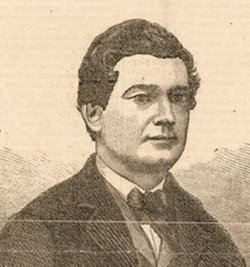 |
| Thomas Tassie |
Today, we understand that it has most likely evolved from the English schoolyard game of rounders (which also evolved into the sister game of cricket), but in 1905 there was a fierce debate, and for many Americans, it was important that baseball be deemed 'American made.' Since the report only really consulted, or at least published, those who would support the narrative championed by Al Spalding and his supporters, Tassie's testimony was recorded : "Baseball is purely an American game." He claimed never to have heard of rounders, and his testimony was used in part to ensure that the Doubleday myth made its way into the history books. Thanks in no small part to Thomas Tassie, baseball's creation myth was fabricated.
Tassie's testimony, however, contains several issues : not only was he 70 years old and almost 60 years removed from the events he recounted, but he was in the same area as Doubleday (New York) for a period of less than four years, beginning in 1845 when the Knicks were formed, and when Tassie was ten years old. Before Tassie's 14th birthday, Doubleday had left for California as a miner '49er. Tassie wouldn't become involved in baseball for several years following Doubleday's departure for California. Moreover, Tassie was born and raised in Brooklyn, and likely, as baseball historian John Thorn writes, never laid eyes on Doubleday, who lived in Manhattan and played baseball in Hoboken. Tassie's testimony, that Doubleday had presented the Knicks with the first field layout, was impossible to corroborate and virtually impossible to believe.
Further, Thorn asserts that baseball writer William Rankin, working on behalf of Mills and the commission, "bullied" the geriatric Tassie into affirming the Doubleday myth when he conducted their interview in 1905. What's more, Thorn notes that Rankin convinced Tassie that a claim he had made in an 1877 discussion with Rankin, that a gentleman named 'Wadsworth' (already inducted in this hall) had presented the first diagram of a baseball field, was misremembered; that he had meant the man was named 'Doubleday.' The fix was in.
Tassie was born in Forres, Scotland, in 1835. He immigrated with his family as a child, growing up in Brooklyn and serving on the local fire company. Like many of baseball's pioneers, he got into baseball through his work association - many joined baseball as a member of their law firm, government office, firehouse, or workshop. Tassie was no different, and in the early 1850s he helped found the Atlantic Club, serving first on their practice squad, but settled into a role as it's chief administrator, serving as its president in 1857 and most seasons after.
In January of 1857 the Knickerbockers expanded their rules committee to include delegations from each of New York's major clubs, including the Atlantic. The rules committee had been influential in the baseball world since the end of the '40s, but it had always regulated only the Knicks' gameplay. Other clubs like the Eagles or the Gotham clubs would typically emulate the the Knicks' play, but the Knicks only set the rules for themselves. The 1857 committee meeting would change everything.
That 1857 meeting marked the birth of the National Association of Base Ball Clubs, and Tassie would regularly represent the Atlantic at their conventions, serving as eventual president of the Association itself in 1869. In 1860, now a respected middle infielder for the Atlantic, Tassie married the sister of Bob Ferguson, one of the top players in the city. In 1866 Ferguson would abandon his team (the Enterprise) for his brother-in-law's club.
This is essentially what we know of Tassie's active involvement in baseball. He was a mediocre player in the 1850s, and a renowned administrator in the 1860s as baseball expanded throughout the country and ultimately became professionalised. His involvement in baseball's early years is certainly enough to warrant consideration as a notable baseball person, but it wasn't his great contribution to the sport.
Tassie would move on from baseball in the 1870s, becoming a teacher, butter salesman, milliner, and Republican party apparatchik. He allegedly went broke in 1881 and was reported missing for a brief time. He was presumed to have killed himself, but does show up back in the historical record, both as a contact of Rankin and Mills, and then deceased in 1906, shortly after his infamous second interview with Rankin.
While Tassie's words were employed in the ultimate obfuscation of baseball's creation myth, he also had an important contribution to the truth of baseball's creation : he was one of the few men who were able to identify Louis F Wadsworth, who we've covered here, as a foundational figure in baseball history, and perhaps one of the original designers of the baseball diamond, something that we hold as, if not true, at least likely today.
When I started putting this project together, I had to decide how to gauge people who impacted baseball negatively -- Judge Landis delayed the farm system and helped maintain the colour barrier; AG Mills immiserated a generation of baseball stars with the reserve clause -- and I ultimately decided that people would be included for the magnitude of their impact on the sport - not necessarily how good they were or that impact was. Ignoring his high-profile role in baseball's early years in New York, Tassie's testimony in 1905 aided the cause of men who set back our understanding of baseball's origins by the better part of a century, and while it's hard to say that was a good event, it was certainly an important one.
Previous : Class of 1886, 1/2: Tom York
Next : Class of 1869, 1/2 : Will White
Friday, 10 December 2021
Class of 1886, 1/2: Tom York
Thomas Jefferson York (1850-1936), Player
Eligible: 1886
Contributions: A consistently good player, York was a solid hitter, outfielder, and baserunner from the birth of professional baseball (1871) through his retirement in 1885. He was never the best player in baseball, but he carried his success across 15 years and three pro leagues. He retired 7th all-time in runs, RBI, and wRC; 2nd in triples and 4th in doubles.
 York was born in Brooklyn in 1850, and would have grown up watching the explosion of competitive baseball in New York city. In 1869, just as the Cincinnati Reds were touring the country as the first openly professional team, York joined his first affiliated club, Brooklyn's Powhatan. He played two seasons for Powhatan and earned a reputation as a hard-nosed Brooklyn ballplayer and a stellar defensive outfielder (remember at the time a player's reputation was defined by his defensive ability).
In 1925, to celebrate 50 years of play, the NL hosted a gala in the offseason to honour the stars of NL history, but the show was stolen, allegedly, by six living men who had played in baseball's very first 'regular' season, 1871. Among them was Tom York, now 74. Interestingly, York alleged that the baseball players were more popular in his day - walking home in uniform with legions of kids following - than the stars of that time, with one exception : Babe Ruth. Ruth, York admitted, was also a better hitter than anybody he ever played with, which is the only example I can think of of an old ballplayer believing a current player was better than the ones in 'his day.'
Eligible: 1886
Contributions: A consistently good player, York was a solid hitter, outfielder, and baserunner from the birth of professional baseball (1871) through his retirement in 1885. He was never the best player in baseball, but he carried his success across 15 years and three pro leagues. He retired 7th all-time in runs, RBI, and wRC; 2nd in triples and 4th in doubles.
York turned pro with the rest of baseball in 1871 with the founding of the NAPBBP, the National Association, signing with the Troy Haymakers. At just 20 years of age he wowed observers with spectacular speed in the outfield and on the bases, collecting 7 triples, good for 5th in the league.
York was what was known as a 'revolver' - a player who jumped teams regularly for the highest bidder, and joined the Baltimore Canaries for 1872-73, then the Philadelphia Whites for 1874. He continued to impress with his outfield defense, and only Dave Eggler rates higher in defensive runs from '72-'74.
What seems clear to me is that York has been mislabeled as a 'power hitter'. He is pretty consistently mentioned as a powerful bat, and I can see how historians would label him as such - his .384 SLG was 9th best all-time as of his retirement in 1885 (min. 3000 PA). When you read early reports of his career, however, it's clear that his bat never garnered much respect - but his legs did. York was fast. Reports raved about his speed in the outfield and on the bases, and one can only conclude that he wasn't a particularly heavy hitter, but that he stretched hits into doubles and triples at an extraordinary rate. York hit just 14 home runs in his career, and drove in only 502 runs, but ripped 89 triples. He collected a bunch of bases and earned a solid slugging percentage not with the power in bat but the speed in his legs. It would seem to me that his reputation as a power hitter was applied by baseball historians looking at his extra-base hit totals, and not by his contemporaries.
York changed teams once again in 1875, going to the Hartford Blues for the final season of National Association play. He would stay there for '76 and '77, when Hartford jumped to William Hulbert's National League. Over the three years he started to come into his own in his mid-20s, and emerged as one of the preeminent outfielders of the time. Among outfielders over the three years York ranked 5th in slugging (.384), wRC+ (115) and defensive runs (20).
 |
| York, Middle row, far right, with the 1876 Hartford Blues |
The prime of York's career started when he joined the Providence Grays, where he shared a star-studded outfield with Dick Higham and one of the league's premiere sluggers, Paul Hines. York, 27, managed to be the best player of the lot, hitting .309 and leading the league with 10 triples and 125 total bases, good for a 155 OPS+.
York would spend five years in Providence before switching teams again, this time to Cleveland. This period, however, 1878-1883 represents the prime of York's career. Over the six years York hit .280 (7th in baseball), slugged .398 (8th), and put up a 126 wRC+ (5th).
Always seen as a leader, York helped Hartford to the 1879 NL Pennant. He'd had success as player/manager of the 1878 club, and was re-instated as player/manager in 1881 after Jack Farrell started the powerful club off to a disappointing 24-27 start. With York at the helm, the '81 Greys went 23-10 and finished 2nd to the loaded Chicago club. 1878 and 1881 represented his only two opportunities at managing, but he made the most of them and posted a winning percentage of .602. His success as manager, and the trust he garnered in order to be given two clubs to lead, is echoed in the baseball media's opinion of York : one newspaper referred to him in 1880 as affable, reliable, hard-working, and courteous.
By the time that 1883 season in Cleveland came around, York was a very different player than the one that showed up in Troy over a decade previous. Never a patient hitter in his youth, York led the league in walks. He was still good for his share of extra-base hits, but a lot of the triples from the 70s were now doubles. He couldn't steal bases very well, and his fielding had gone from outstanding to awful. Now 32, York's legs were shot. Always a hard-nosed player, York had basically never missed a game, and since the inception of organized professional baseball, no player had played in more games than Tom York (858). By age 30 he had a good case of chronic rheumatism as well. One has to to think he was simply worn down.
In 1884 York was sold to the Baltimore Orioles of the upstart American Association. Now battling a debilitating rheumatism he announced plans to retire, but the Orioles promised him $5000 and a cut of concession revenues, and York was induced to spend the next two years in Baltimore, though by this time he had little left. He still drew lots of walks and was good for extra base hits, but he hit just .232 across the two years and was a definitive liability in left field and on the bases. Neither team accomplished much and the league disbanded a few years later.
York was unable to find a contract for the 1886 season.
Like many retired legends of early baseball, York turned to umpiring in retirement, umpiring regularly for the AA and NL in 1886, before giving that up when the meagre paycheck did not justify the amount of abuse umpires had to suffer. The Baltimore Sun regretted his resignation and reported that the AA had lost a good umpire.
York spent much of the next two years at home, but returned to baseball in 1888 to manage the Albany Governors of the International Association. Over the next decade he would be attached to various minor league teams and leagues as a manager or executive, but his relationship with the major leagues was over. Sometime around 1900 he was hired by John McGraw, as many retired ballplayers were, to work at Polo Grounds. York was employed as an usher and security guard for the press box. The New York Telegraphs describes :
York has the pleasant post of trying to keep the actors, tonsorial artists and plumbers out of the press stand. It is old tom who examines your pink paste board and decides whether you are eligible for a seat in the press cage.
 |
| York as Polo Grounds usher in 1922 |
In 1925, to celebrate 50 years of play, the NL hosted a gala in the offseason to honour the stars of NL history, but the show was stolen, allegedly, by six living men who had played in baseball's very first 'regular' season, 1871. Among them was Tom York, now 74. Interestingly, York alleged that the baseball players were more popular in his day - walking home in uniform with legions of kids following - than the stars of that time, with one exception : Babe Ruth. Ruth, York admitted, was also a better hitter than anybody he ever played with, which is the only example I can think of of an old ballplayer believing a current player was better than the ones in 'his day.'
In 1936, as the NL was preparing to celebrate 60 years since its inaugural season, they decided to invite the few living players from that season to the All-Star Game festivities. York was among the invitees, but passed away on February 17, 1936.
 |
| York, far left, at the 1925 National League gala |
York left behind a legacy as a man involved in every level of baseball since before the game turned professional, until it reached the heights of popularity as America's Pastime. He retired as one of the greats of the game, but also a man dedicated to the sport - as an official, a coach, an on-field leader and a standout player.
Previous : 1885 2/2 Charles DeBost
Next : 1886 2/2 Thomas Tassie
Subscribe to:
Posts (Atom)